
Opening Hook
Ali had finally transformed his dark, cluttered basement in Dubai into a cozy game room for his kids. He bought beanbags, installed a projector, and even added LED lights. But there was one problem—airflow. The basement felt stuffy, and when he tried installing a regular ceiling fan, the blades came uncomfortably close to the kids’ heads. That’s when he realized: not every ceiling fan is meant for low-height basements.
If you’ve ever faced a similar situation, you know how tricky it is to balance comfort, safety, and style in a basement with limited ceiling height. The good news? There are ceiling fans designed specifically for such spaces. Let’s explore the best ones.
1. The Basement Airflow Challenge
Basements often feel warmer in summer and colder in winter because they’re partly underground and don’t benefit from natural airflow.
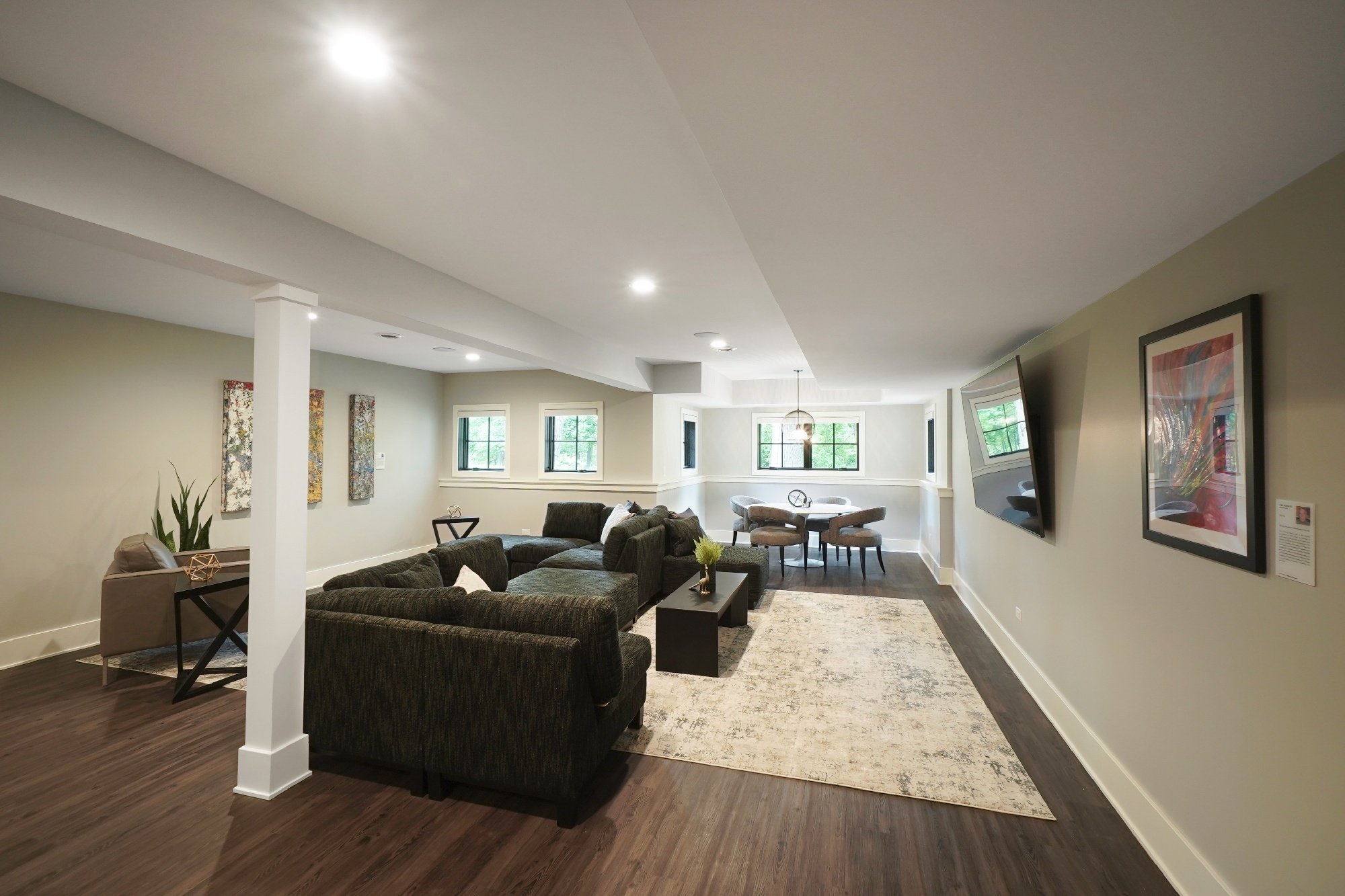
For instance, in cities like Dubai or Karachi, where humidity and heat are common, a poorly ventilated basement can quickly become unbearable. Installing a ceiling fan seems like the obvious fix—but low ceilings pose a safety risk if you don’t pick the right design.
As a result, the ideal fan for a basement isn’t just about looks; it must ensure safe clearance, effective airflow, and energy efficiency.
Read More: Best Wallpapers for Moist Basement Walls
2. Hugger (Flush Mount) Ceiling Fans: The Go-To Option
Hugger ceiling fans—also known as flush mount fans—are designed specifically for low ceilings. Instead of hanging down on a rod, they attach directly to the ceiling.
For example, a family in Abu Dhabi installed hugger fans in their renovated basement gym. Even with an 8-foot ceiling, the fans stayed well out of reach while keeping the air fresh during workouts.
Furthermore, hugger fans come in a wide range of styles, from sleek modern finishes to traditional wooden blades, making them versatile for any basement theme.
Read More: Timelines for Legal Basement Approvals in UAE
3. Low-Profile Ceiling Fans with LED Lights
Basements often lack natural lighting, so why not combine airflow with illumination? Low-profile ceiling fans with integrated LED lights are a smart two-in-one solution.
In contrast to bulky fans with dangling light kits, these designs sit closer to the ceiling and distribute light evenly.
For instance, one homeowner in Sharjah converted his basement into a study area. By choosing a low-profile fan with LED lighting, he solved both the airflow and lighting challenges without cluttering the space with extra fixtures.
As a result, this type of fan is perfect for basements doubling as offices, libraries, or playrooms.
Read More: Top Pakistani Brands Offering Anti-Fungal Paints
4. Ceiling Fans with Short Blades: Compact but Powerful
When ceiling space is tight, blade size matters. Fans with shorter blades (around 36–42 inches) are ideal for compact basements. They circulate air efficiently without overwhelming the room.
For example, a bachelor in Lahore installed a 38-inch fan in his basement studio apartment. Despite the small size, it kept the room cool while ensuring the blades didn’t come too close to the low ceiling beams.
Furthermore, smaller fans also consume less energy, which is a plus if you’re running them frequently in a basement environment.
Read More: Budget Gym Equipment That Fits in Tight Basement Spaces
5. Smart Ceiling Fans for Basements
Technology has made even basement living more convenient. Smart ceiling fans allow you to control speed, direction, and lighting with a remote or smartphone app.
For instance, imagine you’re using your basement as a home theater. You don’t want to pause your movie just to adjust the fan. A smart fan solves that problem instantly.
In contrast, traditional fans may require manual pulls or switches, which can be inconvenient if the fan is mounted high or placed in an awkward spot.
As a result, smart ceiling fans are a great investment for modern basements that double as multipurpose living spaces.
Read More: Installing Solar Air Vents in Basements: A Bright Solution to a Hidden Problem
6. Energy-Efficient DC Motor Fans
Basements already consume extra electricity due to lighting and sometimes dehumidifiers. That’s why choosing a ceiling fan with a DC motor can save energy.
DC motors are quieter, consume up to 70% less energy, and provide smoother airflow compared to traditional AC motor fans.
For example, a family in Dubai Creek Harbor runs their basement fan nearly all day in summer. By switching to a DC motor fan, they noticed a significant drop in their monthly energy bills.
Furthermore, the quieter operation makes these fans perfect for basements used as bedrooms, study rooms, or meditation spaces.
Read More: Partitioning Open-Plan Basements Effectively
7. Safety and Clearance Considerations
Safety should always come first when installing ceiling fans in low-height basements.
- The fan blades should be at least 7 feet above the floor to avoid accidents.
- Opt for flush-mount designs whenever possible.
- Avoid decorative hanging fans or chandeliers in basements with less than 8-foot ceilings.
For instance, Ali’s initial mistake was installing a fan with a downrod in his 7.5-foot basement ceiling. Once he replaced it with a flush-mount fan, the room instantly became safer for his kids.
Read More: Basement Office Ideas – 11 Stylish Work From Home Spaces
8. Alternative Options: When Fans Aren’t Ideal
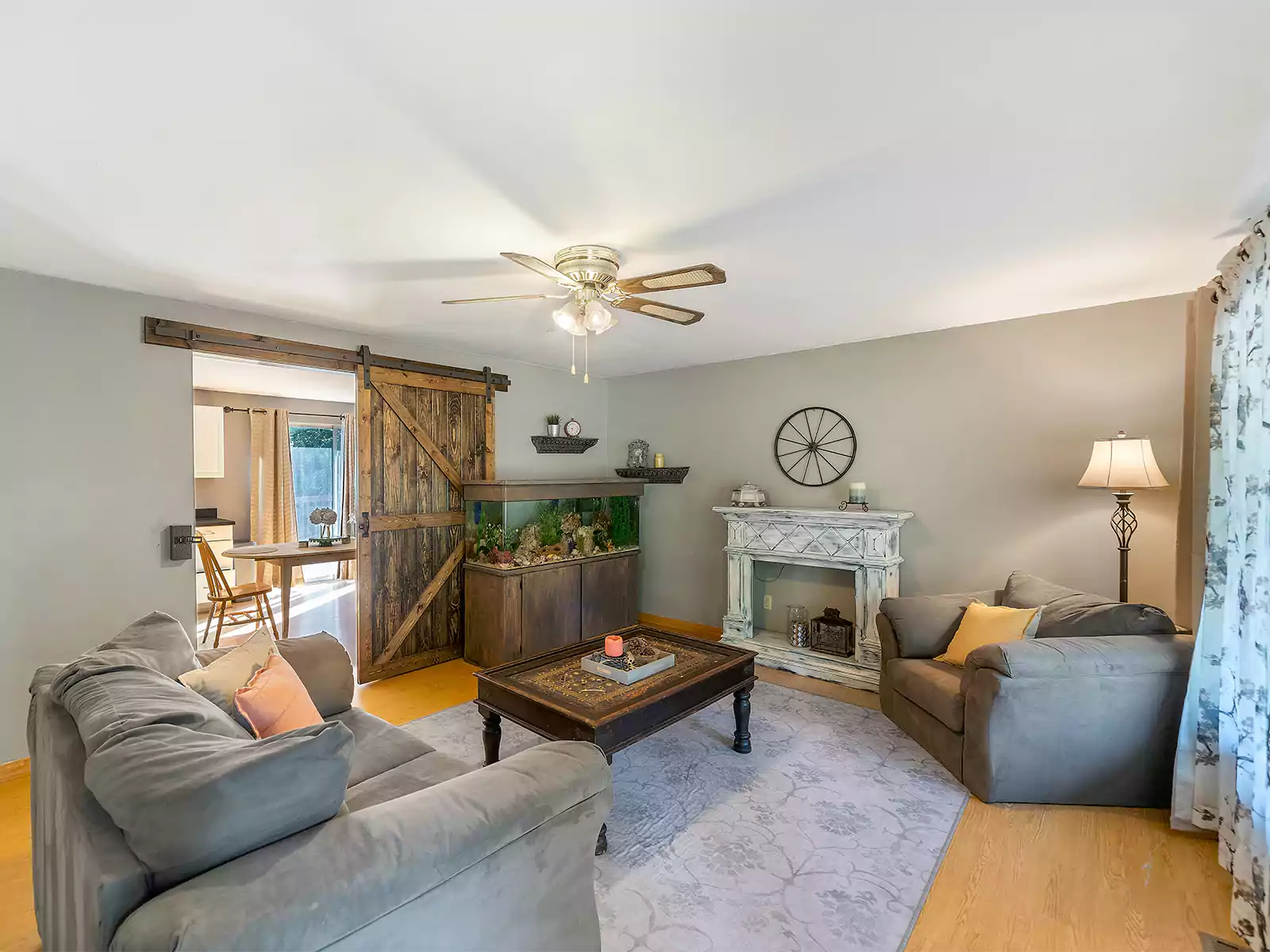
Sometimes, even the best ceiling fan won’t fit due to extremely low ceilings (below 7 feet). In such cases, alternatives can still improve airflow.
- Wall-mounted fans provide targeted cooling.
- Tower fans can be moved around easily.
- HVAC vent extensions can improve airflow from your main system into the basement.
As a result, homeowners with very low ceilings still have options to keep their basements comfortable without compromising safety.
Read More: Basement Setback Rules in DHA Lahore vs Bahria Town
9. Style Meets Functionality
Basements are often treated as afterthoughts, but a carefully chosen ceiling fan can make them stylish as well as functional.
- Modern basements: Go for sleek, metallic hugger fans with LED lights.
- Rustic basements: Wooden blade flush mounts complement exposed brick or stone walls.
- Family playrooms: Compact, colorful fans can make the space fun for kids while ensuring safety.
For example, a couple in Islamabad turned their basement into a rustic wine cellar, complete with wooden beams and a stone accent wall. A wooden-blade hugger fan completed the cozy aesthetic while keeping air circulation steady.
Read More: How to Prevent Wall Sweating in High Humidity Areas
10. Budget Breakdown: What to Expect
Costs vary depending on the type of fan:
- Hugger fans: Affordable, starting around $70–$120.
- Low-profile fans with lights: Mid-range, $150–$250.
- Smart or DC motor fans: Premium, ranging from $250–$500+.
As a result, homeowners can choose based on their needs—whether it’s a budget-friendly fix or a long-term investment in energy savings and style.
Read More: Spa or Sauna in Basement: Is It Possible?
Closing: Creating Comfort Below Ground
A low-height basement doesn’t mean you have to sacrifice comfort or style. The right ceiling fan can transform a stuffy, underused space into a vibrant, breathable retreat.
Ali’s story is proof—once he replaced his unsafe fan with a flush mount model, his kids could play without worry, and the basement finally felt like the cozy hideaway he had envisioned.
Whether you choose a hugger fan, a smart model, or a compact design, remember: airflow is the heart of comfort, and safety is the foundation.
So next time you step into your basement and feel the air growing stale, ask yourself: Isn’t it time to let the right ceiling fan breathe new life into this space?
🏗️ Basement Project Calculator
Latest Post
-

How to Build a Legal Basement Apartment in the USA | Guide
Opening Hook Imagine this: you’re standing in the nearly-finished basement of your home in the USA, and the monthly rent from the future tenant—or perhaps your aging parents moving in with you—is just about enough to cover your mortgage. You’ve envisioned your own “in-law suite,” financial freedom, or added flexibility. But then, you pause and…
-

Basement Bar Remodeling Ideas Wet vs. Dry Bar Designs
Opening Hook Imagine this: it’s a Friday night in suburban America, family and friends gather in the lower level of your home. The music’s just right, laughter echoes off the walls—and there, tucked into a stylish corner of the finished basement, stands your custom bar. The warm glow of undercounter lighting, the soft tap of…
-

20 Best Basement Man Cave Ideas for the Ultimate Space
Imagine this: you come home after a long week in your busy USA-based life, head downstairs, flip on the lights in the basement, and step into your very own retreat — a space built just for you. That’s the magic of basement man cave ideas, a growing trend for homeowners who want a unique sanctuary…
 Arabic
  English