
Basements are no longer just storage spaces or laundry zones—they’ve become full-fledged extensions of the home, often serving as family rooms, guest suites, home offices, or gyms. One element that can dramatically impact the functionality and aesthetic of your basement is a sliding door.
Whether you’re separating rooms, creating an entryway to a walkout patio, or simply looking for a way to add privacy without sacrificing space, sliding doors are the perfect solution. In this guide, we’ll explore top basement sliding door ideas, their benefits, and how to choose the right one for your space.
Why Choose Sliding Doors for a Basement?
Sliding doors are a smart choice for basement renovations due to several advantages:

- Space-saving: Unlike swinging doors, sliding options don’t require extra clearance.
- Light-enhancing: Glass sliding doors allow natural light into the basement.
- Flexible: Ideal for both interior room dividers and exterior access points.
- Stylish: Wide range of materials and designs—from rustic to ultra-modern.
- Accessible: Provide seamless transitions between indoor and outdoor areas.
Read More: Basement Patio Door Ideas: Brighten and Open Up Your Lower Level
Top Basement Sliding Door Ideas
1. Glass Patio Sliding Doors for Walkout Basements
If you have a walkout basement, glass patio doors are a must-have. They create a seamless connection to outdoor living areas while letting in ample sunlight.
Best for: Family rooms, in-law suites, entertainment areas
Design tip: Choose low-E glass for better insulation and UV protection.
Read More: Benefits of Recessed Lights in the Basement
2. Rustic Barn Sliding Doors
Barn doors add a rustic, cozy touch and are ideal for interior use. They work well for dividing living areas or concealing utility zones.
Best for: Media rooms, laundry areas, home offices
Materials: Reclaimed wood, iron hardware
Read More: Adding Lights to an Existing Circuit While Finishing the Basement: A Complete DIY Guide
3. Frosted Glass Sliding Doors
Perfect for privacy without darkness, frosted glass doors are commonly used in basement bathrooms or bedrooms.
Best for: Basement bathrooms, guest rooms
Perk: Filters light but blocks visibility
Read More: How to Do Basement Lighting the Right Way
4. Mirrored Sliding Closet Doors
Mirror-finished sliding doors serve a dual purpose—they make small basements feel larger and function as closet doors.
Best for: Bedrooms, home gyms
Style tip: Go frameless or with sleek metal trims
Read More: Basement Lighting for Low Ceilings: Tips and Ideas to Brighten Your Space
5. Industrial Black-Framed Doors
Sliding glass doors with black metal frames add a chic industrial vibe—perfect for modern, loft-style basements.
Best for: Contemporary home offices, living rooms
Bonus: These doors look high-end and timeless
Read More: Top 9 Basement Lighting Ideas to Brighten Your Space
6. Pocket Sliding Doors
For tight spaces, pocket doors are unbeatable. They slide into the wall and disappear completely when opened.
Best for: Bathrooms, pantries, or small offices
Space-saving solution: Great in narrow basements
Read More: Top Basement Lighting Ideas to Brighten Up Your Space
7. Accordion (Folding) Sliding Doors
Accordion-style doors fold and stack to one side, creating a wide opening to connect indoor and outdoor spaces.
Best for: Party rooms, gym access, game rooms
High-end look: Great for wide patio entrances
Read More: Lighting Help for Our Low Ceiling Basement: Bright Ideas That Work
8. Shoji-Style Sliding Doors
Inspired by Japanese interiors, shoji doors use wooden grids and translucent panels to create a minimalist, serene aesthetic.
Best for: Meditation spaces, creative studios
Elegant and calming: Brings a zen-like feel to basements
Read More: Create a Light & Bright Basement With These Remodeling Tips
9. Sliding Bookcase Door
Conceal a hidden room behind a custom sliding bookshelf. This adds character and creates a secret storage or reading nook.
Best for: Libraries, panic rooms, hidden bars
Fun factor: Adds intrigue and charm
Read More: The Ultimate Guide to Basement Remodeling Lighting
10. Double Sliding Barn Doors
Instead of a single barn door, use a double set that opens from the center—perfect for larger openings or to create a statement entry.
Best for: Main basement entrances, wide hallways
Design tip: Choose contrasting colors to stand out
Read More: What Are the Best Overhead Lights for an Unfinished Basement?
11. Frameless Glass Sliding Doors
These create a clean, uninterrupted visual flow. Frameless designs are perfect for luxury basements and give a modern feel.
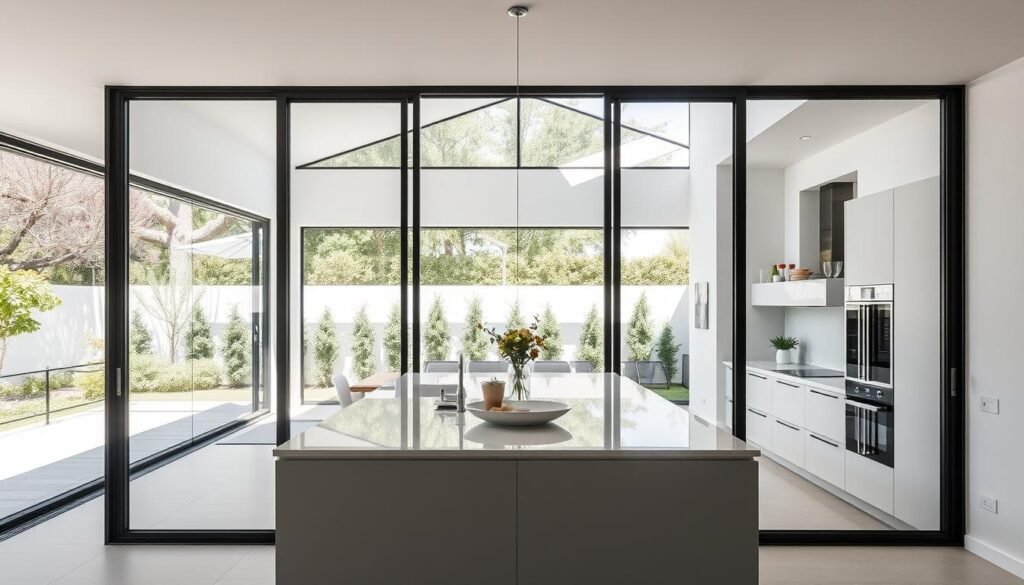
Best for: Wine cellars, lounges, offices
Highlight: Elegant, sleek, and upscale
Read More: Basement Lighting Ideas for a Brighter Space: Transforming Dark into Dazzling
12. Vinyl Sliding Doors with Built-in Blinds
Ideal for walkout basements, vinyl sliding doors with integrated blinds offer privacy and convenience without extra window treatments.
Best for: Family areas, in-law suites
Perk: No dusting or tangling cords
Read More: Considerations When Finishing Your Basement: The Ultimate Homeowner’s Guide
13. Chalkboard Sliding Doors
A fun, functional option especially in playrooms. Kids can draw on them, and they double as message boards.
Best for: Play areas, homeschool rooms
Creative boost: Great for families
Read More: HVAC Upgrades to Consider When Finishing Your Basement: A Complete Guide
14. Metal Sliding Panel Doors
Add a modern industrial twist with sliding doors made from brushed aluminum or steel. These are bold and built to last.
Best for: Minimalist basements, modern gym spaces
Statement piece: Durable and stylish
Read More: Best Way to Heat and Cool a Basement: Expert Guide for Year-Round Comfort
15. Sliding French Doors
Combine the elegance of French doors with the functionality of sliding tracks for a sophisticated yet space-saving option.
Best for: Entertainment zones, guest suites
Aesthetic appeal: Timeless design
Read More: Tips on How to Heat and Cool a Finished Basement: A Complete Homeowner’s Guide
Key Considerations When Choosing Basement Sliding Doors
1. Purpose of the Door
- Exterior: Insulated, weather-resistant materials are essential.
- Interior: Focus on design, privacy, and space optimization.
Read More: Keeping Cool This Summer: Top Basement Remodeling Trends to Watch
2. Natural Light vs. Privacy
- Glass doors bring in light but may need frosted finishes or blinds.
- Solid doors or barn-style offer better privacy for bedrooms or bathrooms.
Read More: Basement Heating and Air Conditioning Considerations: A Complete Guide
3. Moisture and Temperature Control
Basements are prone to humidity and cold. Ensure sliding doors are:
- Weather-sealed
- Energy-efficient (look for ENERGY STAR certification)
- Equipped with proper drainage if exterior-facing
Read More: HVAC in Your Basement: Everything You Need to Know for Optimal Comfort
4. Security
For exterior doors, consider:
- Multi-point locking systems
- Laminated or tempered glass
- Reinforced frames
Read More: The Guide to Finished Basement HVAC: Steps for Planning a Comfortable Space
Sliding Door Size & Installation Tips
- Standard sliding door widths: 5 ft, 6 ft, and 8 ft
- Door height: Typically 80 inches
- Installation Cost: Ranges from $600 to $3,500 depending on style and materials
- Pro tip: Hire professionals if cutting into concrete or load-bearing basement walls
Read More: Transforming Your Basement into a Home Gym: A Complete Guide
Final Thoughts
Whether you’re adding access to a walkout patio, dividing a family room, or creating privacy for a basement suite, sliding doors offer endless potential. They are functional, attractive, and space-saving—making them a must-have feature in any modern basement design.
 English
  Arabic